Solar Grid-Connected Systems
Two Million Households could not be Wrong.
Why pay for rising Electricity Bills when you can generate you own Electricity.
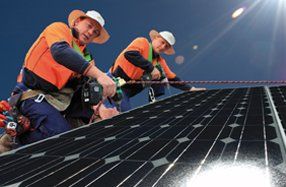
A solar grid-connected system allows you to generate power via solar panels installed on your home or business premises. The power that you generate is used within your premisses and the excess fed into the mains grid, this offset against your electricity usage, leaving you with reduced power bills after installation. This reduces both your overheads and your energy footprint.
A solar grid-connected system produces DC electricity from sunlight. After conversion to AC current via an inverter, this clean energy is fed into the mains grid via your energy meter.
The energy meter records the amount of kilowatt hours (kWh) generated by your solar system and fed into the mains grid. You continue to buy your electricity from your provider at the current rate, as you do now; however the amount that you are charged is reduced by the number of kilowatt hours that you have produced yourself and fed into the grid via your Grid-Connect System. This offset system is called the “Feed-in Tariff” or FiT.
Pyramid Power's Product Range